.:[Double Click To][Close]:.
Showing posts with label japan. Show all posts

Monday, July 18, 2011

Well The Girls Lost


Well the girls lost in the World Cup finals to Japan due to Hope Solo and the American shoot out team choking. It happens, we don't need to hear about women's soccer for the next 4 years.

I bashed the World Cup a week or 2 ago stating that I don't care about it, however, I'll be a hypocrite if I sit here and say I didn't watch it. It was an intense game that obviously went down to the wire, it stinks because there were some pretty cute girls on the US team and it's always nice to see pretty girls happy.

Alex Morgan for example:


For all of you think Hope Solo is cute too shut up, she's scary and I feel like she would argue too much and be too outspoken. Personality kills the looks or coolness of the name.

Also, I think it's a Ladybugs like conspiracy too for the US, no way Abby Wombach is a chick, she's too good and too bad ass. She was literally a men amongst boys out there.

Thursday, March 24, 2011

Passport Health is Seeing Relief Workers for Japanese Tsunami


I know you have all seen the footage, but its hard to stop watching the amazing and frightening power of mother nature when the tsunami hits land, destroying everything in its path. Here at Passport Health we have begun to see relief crews who are on their way to aid in the efforts in Japan.

If you are planning to travel to Japan, make sure you are vaccinated. You will want to be up to date on Tetanus, Diphtheria and Pertussis (tdap), Hepatitis A & B, Flu and Pneumonia.  It is still early spring and was actually snowing in japan on the day the tsunami hit, so be sure to prepare for cold temperatures.  Food, water and sanitation issues are wide spread so bringing portable water purifiers, diarrhea treatment & prevention kits and first aid kits is highly recommended.

Our thoughts are with all of those effected by the devastation in Japan and our hearts go out to all those who are sacrificing of themselves to help.

THANK YOU!

Why Not?

Why not see how Japan explains their nuclear problems to kids?

Hahaha, gotta love Japan. Thanks to Jay for finding this gem.

Wednesday, April 28, 2010

Japan: Hotels

In Japan, hotels can be divided into four basic categories.

First, there is the Ryokan which literally means "Traveler's Inn". If you want to experience traditional Japan, then a night in one these is perfect for just that. Most rooms are Japanese Style, where you sleep on a futon on the tatami mat floor. They are equipped with a large hot spring bath which guests can use freely!

Japan Ryokan 

A smaller version of a Ryokan is the Minshuku (meaning “Peoples Accommodations.”) These are family run guest houses with a warm, homely atmosphere. The rooms are smaller than a Ryokan, but many make up for this in the wonderful homemade food that they serve.

Japan Minshuku

There are also city hotels and business hotels. City hotels are generally very luxurious and there are many world-famous chain hotels and long established Japanese hotels which offer excellent foreign language services. These large-scale hotels are located around train stations and in resort areas.

City Hotel

Business hotels are reasonably cheaper and have been used by workers on business trips, however recently they have begun offering an outstanding and hospitable service aimed at tourists. You may also be familiar with “Capsule” hotels ; small cubby-like rooms available for business-men on the go. If claustrophobia is not an issue, then these accommodations may be just the fit!

Capsule hotel

Monday, April 26, 2010

Japan: extending your stay

If you wish to stay longer, you must apply for an extension at an immigration bureau inside Japan before the expiry date of your current residence permission.

The application process is relatively simple, provided that you still fulfill the conditions for the specific status of residence. It typically takes a couple of days or weeks for the application to be processed, and you are allowed to remain in Japan during that time even if your previous residence permission expires in the meantime.

However, extensions will not be granted if the purpose of the stay has already been completed or there are other problems connected with the status of residence.

Applications for extensions of periods of stay may ordinarily be submitted up to two months before the expiration date of the period of stay.

Friday, April 23, 2010

Japan: Staying Safe

When traveling to any foreign country it is imperative to practice all safety precautions and know how to react in the case of an emergency. What happens if you or one of your family members were injured? Would it be a nightmare getting proper care? E.g. What if you slipped on Fuji-san? These are all great questions!

Never go to Japan (or anywhere for that matter) without adequate health insurance. You will not get help without it. If you’re really concerned, particularly with things like climbing Fuji, it’s sometimes better to get a tour, for the peace of mind aspect of knowing you will have help on hand if needed. In case of an emergency, it's best to have a Japanese-speaking person call the emergency services in Japan. If that's not an option, call the Tokyo English Lifeline (TELL) at (03) 3403-7106 for emergency assistance in English.

Climber on Mt.Fuji

Also, depending on when you travel; Japan’s summer heat and high humidity can lead to possible food poisoning, fatigue and heat stroke. In spring and fall, many people suffer from rhinitis and itchy eyes caused by pollen, especially to Japanese cedar pollen. A small medical kit can save you the problem of running around and looking for items that are a lot easier to find at home.

Hygiene standards are high in Japan, and medical facilities (although expensive) are widely available. So, the most important preventive measure is to make sure that you are healthy BEFORE you start traveling!

Thursday, April 22, 2010

Japan: Cherry Blossom Festival

Hanami (cherry blossom viewing) has been a Japanese custom since the 7th century when the aristocrats enjoyed looking at beautiful sakura and wrote poems. Sakura is a symbol of Japan, and it's said that there are over four hundred varieties of cherry trees in Japan. The most popular kind of sakura which can be viewed everywhere in Japan is somei-yoshino (Yedoensis). Japanese cherry trees do not yield fruits like other cherry trees.

Cherry blossoms can be viewed from January to June in different regions in Japan, but most of cherry blossom festivals fall between March to May.


Gorgeous flowers are the main attraction of the festivals, but various traditional Japanese performing arts presented in many festivals can't be missed. Joining tea ceremonies held under cherry trees can be a memorable experience as well. As hanami (cherry blossom viewing party) is an important Japanese custom, people enjoy eating home-cooked meals or take-out food under cherry trees.

Wednesday, April 21, 2010

Japan: Food-themed theme parks!

A theme park centered around a certain type of food...Count me in!

The concept of developing a theme park around a certain food or dish is growing more popular in Japan.  Unlike the theme parks that you may be used to, these food theme parks are located indoors and usually decorated according to a specific epoch or fantasy theme.

The key to a successful food-themed park is to have the most well-prepared and largest variety of that particular dish available.  To accomplish that the dishes are not prepared by just anybody, but by top chefs and restaurants.  Accordingly these theme parks are not cheap and you can expect to pay 1000-2000 yen per person ($10-$20) just to enter and be sure to brush up on your Japanese as English descriptions are not always available.

Check out some of the fantastic food theme parks:

Shin-Yokohama Ramen Museum- The Ramen Museum introduces the history of ramen and features about a dozen ramen stores with regional flavors from across Japan in a setting of Tokyo in the 1950s, the time when ramen gained popularity.

Ikebukuro Gyoza Stadium- Located inside the Namjatown in the Ikebukuro Sunshine City complex, the Ikebukuro Gyoza Stadium features various gyoza dishes by famous restaurants from across Japan. The theme is Tokyo of the 1950s.

Jiyugaoka Sweets Forest- Sweets Forest in the pleasant city district of Jiyugaoka specializes in various, mostly Western style sweets, such as cakes and ice cream. There are about half a dozen stands operated by famous patissiers.

And what I would imagine would be MY personal Favorite!

Ice Cream City- Also located inside the Namjatown in the Ikebukuro Sunshine City complex, the colorful Ice Cream City consists of about ten different ice cream stores, selling countless types of ice cream.


Tuesday, April 20, 2010

Japan: Documents needed for entry

A valid passport and an onward/return ticket are required for tourist/business "visa free" stays of up to 90 days. Passports must be valid for the intended period of stay in Japan. Americans cannot work on a 90-day "visa free" entry. As a general rule, "visa free" entry status may not be changed to another visa status without departing and then re-entering Japan with the appropriate visa, such as a spouse, work or study visa.

For more information about the Japanese visa waiver program for tourists, Japan's rules on work visas, special visas for taking depositions, and other visa issues, travelers should consult:

The Consular Section of the Embassy of Japan
2520 Massachusetts Avenue NW
Washington, DC 20008
Phone: (202) 238-6800,

Or the nearest Japanese consulate: visit the Japanese Embassy’s website for location details. The U.S. Embassy and U.S. consulates in Japan cannot assist in obtaining visas for Japan so you must take care of this before you leave your home country.

All foreign nationals entering Japan are required to provide fingerprint scans and to be photographed at the port of entry. This requirement does not replace any existing visa or passport requirements. Foreign nationals exempt from this requirement include special permanent residents, persons under 16 years of age, holders of diplomatic or official visas, and persons invited by the head of a national administrative organization. U.S. travelers on official business must have a diplomatic or official visa specifying the nature of travel as "As Diplomat," "As Official," or "In Transit" to be exempt from biometric collection. All other visa holders, including those with diplomatic and official visas stating "As Temporary Visitor," are subject to this requirement.


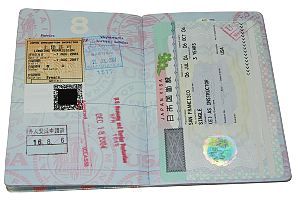
Passport with Japan landing permission sticker (left), visa (right)

Monday, April 19, 2010

Japan: FOOD!

Japanese cuisine offers a great variety of dishes and regional specialties. Some of the most popular Japanese dishes are listed below.

Sushi
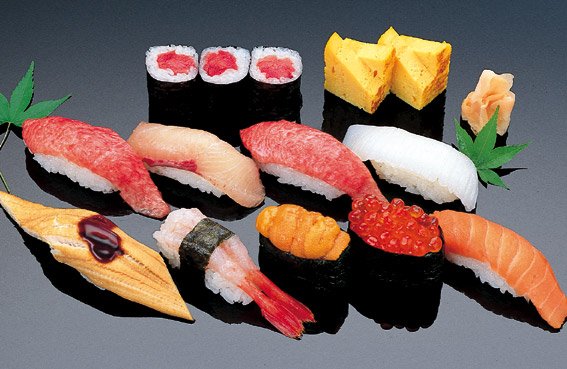
Sushi can be defined as a dish which contains sushi rice, cooked rice that is prepared with sushi vinegar. There are various kinds of sushi dishes.


Tempura
Tempura is seafood, vegetables, mushrooms and other pieces of food coated with tempura batter and deep fried. Tempura was introduced to Japan by the Portuguese in the 16th century, but has become one of Japan's most famous dishes internationally.

Domburi
A bowl of cooked rice with some other food put on top of the rice. Some of the most popular toppings are tempura (tendon), egg and chicken (oyakodon), tonkatsu (katsudon) and beef (gyudon).


Sashimi
Sashimi is raw seafood. A large number of fish can be enjoyed raw if they are fresh and prepared correctly. Most types of sashimi are enjoyed with soy sauce and Japanese horseradish (wasabi).

Ramen
Ramen is Chinese style noodles prepared in a soup with various toppings. Ramen is one of the many popular dishes that were originally introduced from China but have become completely Japanized over time


Finally the drink, sake is the most popular drinks in Japan. It is a Japanese alcoholic beverage made from rice, which sometimes is also called rice wine, but in truth, it is not a wine, nor is it exactly a beer, nor a spirit. Sake is a rather unique type of fermented alcohol.

Here is an interesting clip on how to eat sushi properly:


Japanese:
How To Eat Sushi

Wednesday, April 14, 2010

Japan: Major Airports

If you're heading to Japan you now have almost 100 airports to choose from. Lucky number 98 opened March 12, 2010 in Ibaraki. Unfortunately the passenger limit on the plane was cut in half.

Getting to Japan by air is not difficult thanks to the fact that there are flights to the country’s international airports from most major cities on the planet. The majority of flights arrive in Tokyo; some also fly into one of the other international airports. These are Nagoya, Niigata and Osaka on the island of Honshu, Fukuoka, Kagoshima, Kumamoto and Nagasaki on Kyushu, Naha on Okinawa and Sapporo on Hokkaido.

The main airlines serving Japan are numerous. Japan Airlines (JAL) operates the most flights in and out of the country. It has direct connections between Tokyo or Osaka to Chicago, Dallas, Las Vegas, Los Angeles, New York, San Francisco and Vancouver in North America as well as numerous destinations in the UK, Australia and New Zealand!
- Japanese Airlines plane

• Narita or The New Tokyo International Airport is located about forty miles north of the city center but several buses and shuttles leave from all terminals and take about an hour to reach the city. You can buy tickets for all services inside each of the terminals.

• Kansai International is about thirty miles south of Osaka and again there are regular bus services into the city centre and they take about thirty minutes to get there.

• Fukuoka International is twenty minutes away from the city of the same name and Nagoya International lies six miles north of the city.
Narita Airport.


There are numerous sites that offer flight information for every airport in Japan. Make sure to be pro-active and buy your tickets well in advance.

Tuesday, April 13, 2010

Japan: How to get around

Getting around Japan is fortunately pretty easy, there are 127 million people living on this small island nation and to avoid them all buying cars to get around, Japan’s government has put in one of the best public transport systems in the world.

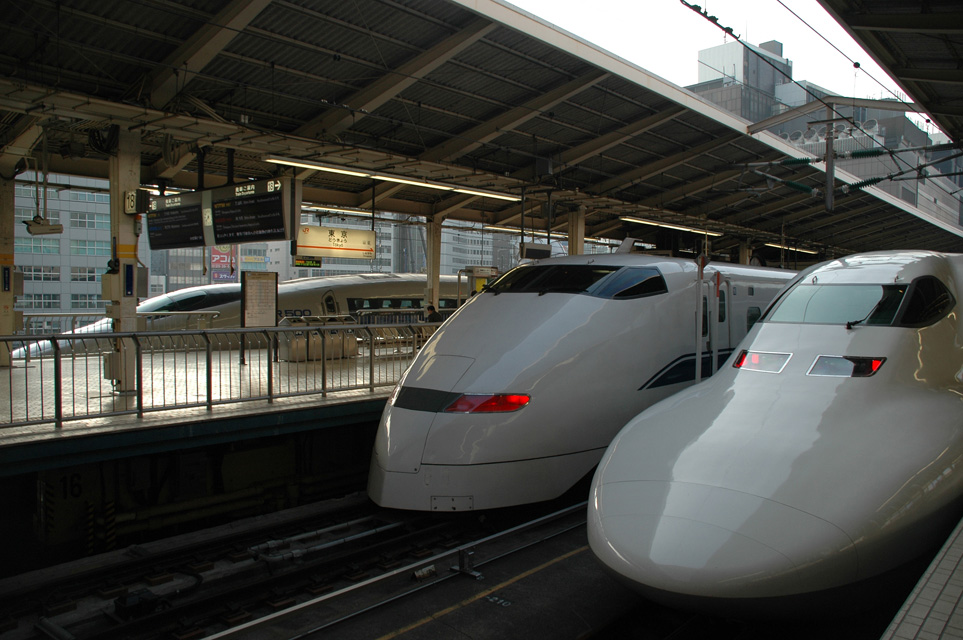
The Shinkansen bullet train for example is faster to get from one city to another than a plane, it is also cheaper and many of them leave every 15 minutes and on time.

Japan Rail Pass – The Japan Rail pass is a popular purchase for many visitors planning to travel in Japan and can save quite a few dollars but the pass has a few limitations which may make the pass not suitable for some.

Buses – Catching a city bus in Japan can be confusing for any non Japanese speaking person, as the bus system is mainly used by locals all of the signs will be written in Japanese. In contrast the subway system does use a mixture of both Japanese and English, hence the reason the subway is favored by tourists.

Taxis – In all centers of Japan especially around major railways there is no shortage of taxis when you need one. The taxi is usually a Toyota Crown Comfort or sometimes even a Nissan Cedric.

Local Trains and Subway – One of the best ways for any tourist to get around Japanese cities is by train. The local trains are fast, efficient and always on time. The main problem any non Japanese speaking tourist may find in using the train system is a lack of info written in English at some stations, so its best to be to know where you are going before you travel.

Shinkansen Bullet Train – Japan is known for the world's most efficient and convenient rail service, the Shinkansen or Bullet Train is the jewel in Japan's rail crown, this tightly scheduled, safe, punctual and super fast service is an amazing service and the best way to travel long distance throughout Japan.

For sorting through transport schedules and fares, Hitachi's Hyperdia is an invaluable companion, with versions available for Windows and PalmOS, and is also usable online. Jorudan and NTT Townpage both provide useful English-language web versions. The paper version of this is the Daijikokuhyō, a phonebook-sized tome available for browsing in every train station and most hotels, but it's a little challenging to use as the content is entirely in microscopic Japanese. A lighter version that just includes limited express, sleeper and bullet trains (shinkansen) is available from the Japan National Tourist Organization's (http://www.jnto.go.jp/eng/) overseas offices.

In Japanese cities, a place's address is useful for mail, but it's nearly useless for actually getting there. Most places are described in terms of the walking distance from the nearest train station, and relative to local landmarks.

Monday, April 12, 2010

Japan: Etiquette

Correct manners among the Japanese are very important. Whether you are traveling for leisure, business or adventure, spare yourself the embarrassment by getting to know a little more about Japanese Society.

1. Know how and when to bow: A slight dip of the neck and shoulders is plenty for a casual hello to friends!

2. Observe dining etiquette: Eat sushi with your fingers and sashimi with chopsticks. For soup, use your chopsticks to pick out the solid food and then drink the remaining liquid from the bowl. Feel free to slurp noodle soup loudly, this shows you are thoroughly enjoying the food. Tipping is not only unnecessary, but insulting! How about that?
Quick Tip- Use condiments such as wasabi and soy sauce sparingly. Using too much suggests that the chef didn’t season the food properly. (overdoing the wasabi never seems like a good idea to me anyway!)

3. Show respect for business cards: Offer business cards with both hands, information facing the recipient, and take theirs with either your right hand or both. Spend at least 15 seconds reading their card or you’ll appear disrespectful.

4. Follow business meeting etiquette: If you’re at a business meeting, always wait to be seated by your host; where you sit is predetermined by your status. If you’re served tea or coffee, accept it as is, which may or may not be with milk and sugar. Take a few sips even if you don’t want it.

Don’t stress out; like many other foreign countries, the people will understand if you forget or slip on etiquette. Do your best to remember what you can and if all else fails just observe what others are doing and try and blend in!


Friday, April 9, 2010

Japan- Staying Connected

Below are a few alternatives for you to stay connected with family and friends while you are traveling Japan.

Internet – “Manga cafes" are dotted along the streets of almost every city in Japan. For a very reasonable price (about 100 Yen – US$1.09 per 15 minutes), you receive a private cubicle with a PC with internet access at blistering Japanese internet speeds. The chairs are incredibly comfortable (making them an excellent place to sleep for the cash-deprived), and you can even order snacks and drinks from the staff.

Phone – You can buy prepaid international phone cards from just about any convenience store. Or if you decided to use a pay phone, you will find them available in most stations. Here are the instructions on how to make an International Telephone Call.

Post – The Japanese postal service is excellent! Domestic and international mail service is very quick and reliable. There are post offices in every major city and minor town. Another thing to remember is that the post office is one of the few places in Japan that is guaranteed to have ATMs that take international cards.

Thursday, April 8, 2010

Japan: History

Traditional Japanese legend sustains that Japan was founded in 600 BC by the Emperor Jimmu, a direct descendant of the sun goddess and ancestor of the present ruling imperial family. It is believed that Japan was born from the love between two gods: Izanagi and Izanami. This is one of the reasons the Japanese population deems the emperor is a living god, and the characters which make up Japan's name mean sun-origin. So that is why Japan is sometimes referred to as the "Land of the Rising Sun."

The first Japanese settlers go back to the Jomon Period more than 8 000 years ago. But the first real Japanese state wasn’t created until the 8th century, whose first capital was Nara. This city was built following the model of Chinese cities.
 Temple in Nara 

During the first years of existence of the Japanese state the emperor lived in Nara. However, at that time there were many fights and wars between divisions and at one point the emperor was forced to move to Kyoto. Today, Kyoto is one of the most beautiful cities in Japan and absolutely a must see!
 Kyoto

About AD 405 the Japanese court officially adopted the Chinese writing system. During the sixth century Buddhism was introduced. These two events revolutionized Japanese culture and manifested the beginning of a long period of Chinese cultural influence!

Tuesday, April 6, 2010

Japan: The Origin and "how to" of SUSHI!

We are BIG fans of food around here so every time we explore a new country, the cuisine is one of our favorite topics.  (if not THE favorite topic.)  Exploring Japan this month, naturally we thought of sushi.

The origin of sushi dates back many decades when fermented rice was wrapped around raw fish as a technique of preservation. It was called nare-sushi. Eventually the Japanese acquired a taste for the raw fish/rice cuisine and calling it seisei-sushi, this technique of preservation eventually became a cuisine.

During the Edo Era between the 1600’s and the 1860’s haya-sushi became what is popular today; raw or partially raw fish wrapped in rice and seaweed accompanied by vegetables and vinegar. Many modern sushi restaurants serve these “sushi rolls” today.

In the 19th century, when Japan was still calling its era the Edo Era, a new form of sushi was developed named nigiri-sushi. This is the most common type of sushi in restaurants as it is a mound of rice topped with a piece of fish.


How to make a sushi roll:

*It is important to remember that consuming raw or undercooked meat, poultry, seafood, shellfish and eggs may increase the risk of food borne related illness. Fresh fish should be frozen at under -4 degrees Fahrenheit for a significant time in order to kill all the parasites.

1. Place nori (seaweed) on a bamboo mat with the shiny side down.
2. Spread pre-cooked rice thinly on the nori, thinly enough to see nori underneath.
    a. Leave half an inch space on nori (furthest end from you) to dab warm water on; this will help hold the roll together.
3. Place all ingredients (fish, vegetables, etc) in the middle of the roll.
4. Start to roll the sushi away from you with the bamboo mat until it comes together.
    a. It is recommended to push the rolled up sushi bundle with medium pressure to tighten the roll and combine ingredients.
5. Cut the log in the middle and each half into sections.
6. Enjoy!

For more detailed information on how to properly cook the rice and on how to make sushi, visit the following website http://www.mahalo.com/how-to-make-sushi.

Monday, April 5, 2010

Japan: What to Pack

With its eclectic blend of modernity and antiquity, Japan holds wonder after wonder. Here's a guide of what to pack for Japan without developing traveler’s stoop.

Bags – The general consensus among travelers is that backpacks are best - they're often hardier and are much easier when you get to steps or uneven pavements.

Documents – Your passport and visa should be top of your to-pack list. On your to-do list, add: Photocopy passport, and put copies in main bag and hand luggage. Leave another copy with a parent or someone reliable - if you do lose your passport, it'll make things much easier.

Clothes – Most places in Japan get cold in the winter, when the temperatures can fall well into the minuses, so warm clothes are needed if you're going then. Take something waterproof if you're going to be there during the June wet season.

Shoes – Pack footwear that's comfortable and suitable for whatever time of year you're going. If you're buying shoes especially for your trip, wear them a few times before you leave to minimize the risk of blisters.

Camera – Pack a good quality camera and lots of film or memory cards and you can click away at the cherry blossoms and Mount Fuji!

Toiletries – You can probably buy your brand of toiletries, and hundreds more, in Tokyo and other cities. If that seems like a waste of time, pack the essentials. Buying travel-size bottles might seem like a good idea but unless you buy a few, and throw them away as you use them, it's worth packing normal-sized ones. Conditioner can be used as shaving gel, facial wash as shower gel, moisturizer as cleanser etc. If you're traveling with someone, you might want to share toiletries.

First aid kit – Having a basic first aid kit can save you trips to the chemist - consider packing diarrhea treatments, band-aids (including blister plasters), scissors, painkillers, bandages, tweezers and antiseptic wipes.

Guide books - It's entirely up to you how much you use a guide book. Some people follow their recommendations religiously while others prefer to discover the best restaurants and sights for themselves.

Pen and paper – Writing materials will probably become more useful than you think - for annotating your guide book, jotting down bus times or directions, writing postcards or a game of Pictionary when words or sign language fail!

Adapter – If you want to plug in chargers or any other electrical items, you'll need an adapter as the voltage is different from the USA.